

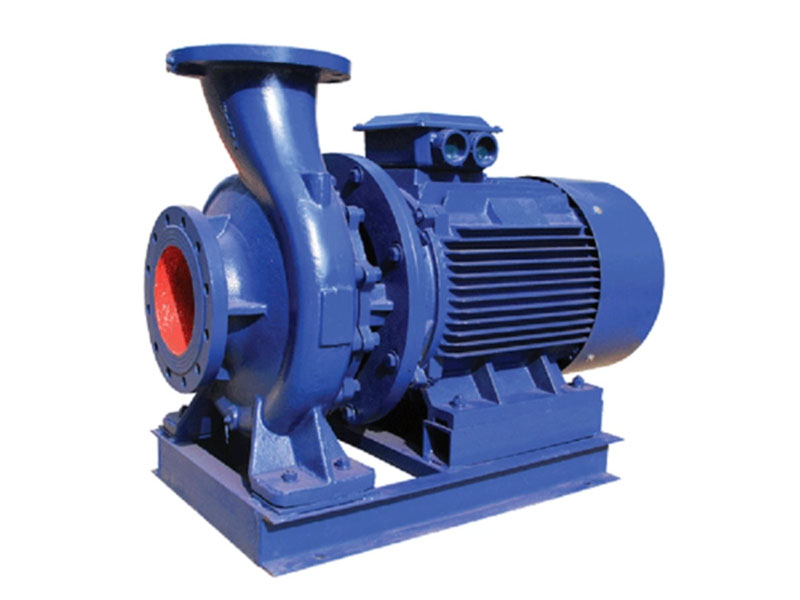
Sludge screw pumps have become a preferred technology for moving thickened and dewatered sludge in
modern wastewater treatment plants. By combining gentle conveying with high efficiency and low
maintenance, these pumps offer a cost-effective and reliable solution for a wide range of sludge
handling tasks.
A sludge screw pump is a positive displacement pump specifically designed to convey
viscous, abrasive and solids-laden media such as sewage sludge, digested sludge,
thickened sludge and dewatered sludge cake. It uses a helical screw or rotor turning
inside a stator or trough to move sludge in a controlled, continuous flow.
The term “sludge screw pump” is often used for two closely related technologies:
Progressive cavity screw pumps – a single-rotor helical screw
turning inside an elastomer stator. Commonly used for liquid to pasty sludge
with high solids content.
Open channel screw pumps (Archimedean screws) – a large-diameter
screw rotating in an open trough. More common for raw wastewater lift, less for
high?solids sludge cake. In this article, the focus is on enclosed
progressive-cavity-style sludge screw pumps for sludge transfer.
In wastewater treatment plants, a sludge screw pump is often selected when conventional
centrifugal pumps can no longer handle the high viscosity, high solids content or
variable flow conditions of sludge streams. Its gentle pumping action makes it ideal
for:
Sludge screw pumps operate on the progressive cavity principle. The main components
are a single-helix rotor and a double-helix stator. As the rotor turns inside the
stator, cavities are formed that progress from the suction side to the discharge side
of the pump, carrying sludge with them.
Because the pump is positive displacement, the flow rate is almost directly
proportional to the pump speed and relatively independent of discharge pressure, within the
design limits. This makes a sludge screw pump easy to control and highly suitable for dosing
or constant feed applications.
While designs differ across manufacturers, sludge screw pumps share several
common features that make them well suited for wastewater treatment.
Material selection for a sludge screw pump is critical for chemical resistance,
abrasion resistance and service life.
| Component | Common Materials | Selection Considerations |
|---|---|---|
| Rotor | Stainless steel (AISI 304/316), duplex steel, hardened alloy steel | Chemical resistance, hardness, abrasion resistance, cost |
| Stator lining | NBR, EPDM, FKM, natural rubber | Temperature, chemical composition of sludge, oil or solvent presence |
| Housing / casing | Cast iron, ductile iron, stainless steel | Corrosion resistance vs cost, structural strength |
| Seals | Mechanical seals (carbide faces), packing, lip seals | Pressure rating, maintenance access, leakage tolerance |
| Drive shaft / coupling rod | High-strength steel, stainless steel | Torque transmission, fatigue resistance, corrosion |
Sludge screw pumps are widely recognized as a cost-effective solution for wastewater
treatment plants, mainly due to the following advantages.
A sludge screw pump can reliably handle:
The progressive cavity action of a sludge screw pump gently conveys sludge with minimal
shear and agitation. This can help:
Flow from a sludge screw pump is smooth and nearly proportional to speed, making:
Unlike many other sludge pump types, a sludge screw pump can develop high discharge
pressures, enabling:
When correctly sized and operated, sludge screw pumps can offer:
Sludge screw pumps are used throughout both municipal and industrial wastewater
treatment facilities. Common applications include:
dewatering units to silos, containers or incineration systems.
In addition to municipal plants, sludge screw pumps are widely used in:
Performance of a sludge screw pump will depend on rotor/stator geometry, speed,
number of stages and sludge characteristics. The values below are indicative
ranges for municipal sludge applications.
| Parameter | Typical Range | Notes for Wastewater Treatment |
|---|---|---|
| Flow rate | 0.5 – 300 m3/h (2 – 1,320 gpm) | Smaller units for dosing; larger for transfer and feeding dewatering lines |
| Discharge pressure | Up to 24 bar (350 psi) or more (multi-stage) | Number of stages increases pressure capability |
| Solids content | Up to 10% DS for liquid sludge, higher with hopper-fed designs | Special cake pumps can handle 20–45% DS |
| Viscosity | Wide range, from low viscosity to paste-like materials | Speed and geometry adapted to viscosity |
| Operating temperature | 0 – 90 °C (32 – 194 °F) | Depends on elastomer selection and sludge chemistry |
| Speed | 0.2 – 400 rpm | Lower speeds for abrasive or high-solids sludge |
| Dry-running tolerance | Limited; requires protection systems | Temperature sensors or dry-run protection recommended |
The following table provides an example of generic specification data
for a range of sludge screw pump sizes commonly used in wastewater treatment plants.
Values are indicative and should not be used for detailed design without verification.
| Pump Size | Approx. Flow Range (m3/h) | Max. Pressure (bar) | Typical Speed (rpm) | Solids Content Range | Typical Applications |
|---|---|---|---|---|---|
| SSP-10 | 0.5 – 5 | 12 | 150 – 350 | 0.5 – 5% DS | Polymer-dosed sludge feeding small thickeners or pilot plants |
| SSP-25 | 3 – 15 | 12 | 120 – 300 | 1 – 6% DS | WAS transfer, small digester feed, thickened sludge recirculation |
| SSP-50 | 10 – 40 | 18 | 80 – 250 | 2 – 8% DS | Primary & secondary sludge transfer to thickeners or digesters |
| SSP-80 | 30 – 80 | 18 | 60 – 200 | 3 – 8% DS | Digested sludge pumping to dewatering equipment |
| SSP-120 | 50 – 150 | 24 | 40 – 160 | 3 – 10% DS | Large plant sludge transfer and centralized dewatering feed |
| SSP-HC (Hopper Cake) | 5 – 60 (equivalent paste flow) | 24 | 10 – 80 | 15 – 35% DS | Dewatered sludge cake feeding silos, containers or incineration |
Correct selection of a sludge screw pump is essential to achieve reliable operation
and cost-effective performance. Engineers should consider:
Proper installation is crucial for long-term, trouble-free operation of sludge
screw pumps in wastewater treatment plants.
For dewatered sludge cake, special considerations apply:
A sludge screw pump requires regular but relatively straightforward maintenance.
When maintained properly, it can provide a long service life and low total
cost of ownership.
Service life depends on sludge abrasiveness, operating pressure, speed and
material selection. Typical ranges are:
| Component | Typical Service Interval | Influencing Factors |
|---|---|---|
| Stator | 1 – 5 years | Abrasiveness, temperature, chemical attack, speed, pressure |
| Rotor | 2 – 8 years | Surface hardness, corrosion, solids content |
| Mechanical seal | 1 – 3 years | Lubrication, solids, temperature, pressure fluctuations |
| Bearings | 3 – 10 years | Alignment, lubrication, vibration, loading |
When evaluating sludge screw pumps, engineers should compare:
In many cases, the slightly higher initial investment in a high-quality sludge
screw pump is offset by lower energy use, fewer failures and reduced downtime.
Sludge screw pumps compete with several other pump technologies in wastewater
treatment. Understanding the differences helps in selecting the most
cost-effective solution for each application.
| Pump Type | Key Strengths | Common Limitations | Typical Uses vs Sludge Screw Pump |
|---|---|---|---|
| Sludge screw pump (progressive cavity) | Handles high solids, viscous sludge; high pressure; gentle flow; good controllability | Stator wear; limited dry running; needs correct sizing | Preferred for thickened and digested sludge transfer and dewatered cake feeding |
| Centrifugal pump | Low capital cost; simple design; suited for thin liquids | Poor performance with high-viscosity or high-solids sludge; sensitive to air | Used for dilute sludge or mixed liquor; screw pumps for thicker sludge |
| Submersible sewage pump | Compact installation; handles rags and solids; simple in wet wells | Limited to moderate solids content; wear with abrasive sludge | Common for raw sewage; progressive cavity for thick sludge |
| Peristaltic hose pump | High suction lift; good for dosing; dry-run tolerant | Hose is a wear part; flow range often smaller; pulsating flow | Used for chemical dosing or smaller sludge flows; screw pumps for larger flows |
| Diaphragm pump | Can handle slurries; self-priming; no mechanical seals | Pulsating flow; more complex valves; limited for very thick sludge | Spot transfer or portable tasks; screw pumps for continuous duty |
| Open channel Archimedean screw pump | High efficiency for large flows at low head; handles solids gently | Bulky; mainly for low-head lifting; not for high-pressure pipelines | Lifting raw wastewater; progressive cavity screws for pressure applications |
Among these options, the sludge screw pump often provides the best combination of
high solids handling, controllable flow and pressure capability required for
sludge transfer and dewatering feed in wastewater treatment plants.
Energy consumption and lifecycle cost are key factors in sludge pump selection.
Sludge screw pumps can be highly energy-efficient when matched correctly to the
duty conditions.
| Cost Category | Description | Potential Optimization |
|---|---|---|
| Capital cost | Pump, motor, baseplate, controls, piping, instrumentation | Standardization of pump sizes; modular design |
| Energy cost | Electricity for motor over pump lifetime | Proper sizing, VFD control, low-friction piping |
| Maintenance cost | Spare parts, labor, tools, service contracts | Predictive maintenance, good sludge screening, abrasion control |
| Downtime cost | Lost treatment capacity, process interruptions, backups | Redundant pumps, quick-change wear parts, bypass lines |
While sludge screw pumps are not usually governed by a single dedicated standard,
their design, installation and operation intersect with several widely recognized
guidelines and best practices in wastewater engineering.
Engineers selecting sludge screw pumps should consult applicable regulations in their
jurisdiction, as requirements for materials, electrical equipment, explosion protection
or hygiene can vary widely between regions and industries.
A sludge screw pump can handle much higher solids content and viscosity than most centrifugal
pumps. It provides more stable flow, higher pressure capability and gentler handling of sludge,
which is especially important for thickened and digested sludge and for feeding dewatering
equipment.
Yes, they are designed to handle sludge with fibrous content and some level of abrasion.
However, the level of grit, sand and other abrasive solids should be assessed to select
appropriate materials and operating speeds. Good upstream screening and grit removal will
extend pump life.
Progressive cavity style sludge screw pumps have good suction capability and can self-prime
under appropriate conditions. For reliable, long-term operation in wastewater applications,
flooded suction is still preferred wherever feasible.
Flow rate is primarily controlled by adjusting pump speed, typically via a variable frequency
drive (VFD). Because the pump is positive displacement, flow is approximately proportional
to speed, allowing accurate process control.
Dry running can quickly damage the stator because there is no sludge to provide lubrication
and cooling between rotor and stator. Protection devices such as temperature sensors,
power monitoring or level switches should be used to prevent or limit dry-running periods.
Replacement intervals depend on many factors, including sludge abrasiveness, operating speed,
temperature and maintenance practices. In typical municipal wastewater service, stator life
may range from one to several years, while rotors often last longer. Planned inspection and
replacement minimize unexpected failures.
Yes. They are widely used in industrial wastewater plants where effluents contain high solids,
fibers or viscous sludges. Proper selection of materials and elastomers is essential to handle
any aggressive or solvent-based components present in industrial sludge.
Sludge screw pumps provide a robust, flexible and cost-effective solution for moving sludge
at virtually every stage of a wastewater treatment plant. Their ability to handle high solids
content, deliver stable flow at high pressure and operate efficiently over long lifetimes
makes them a preferred choice for many engineers and plant operators.
By understanding sludge characteristics, hydraulic requirements and installation constraints,
it is possible to select and configure a sludge screw pump system that reduces energy
consumption, minimizes maintenance and supports reliable, compliant wastewater treatment
operations.
```

Copyright ? Jiangsu Longjie Pump Manufacturing Co., Ltd.



 Phone
Phone
Comment
(0)