

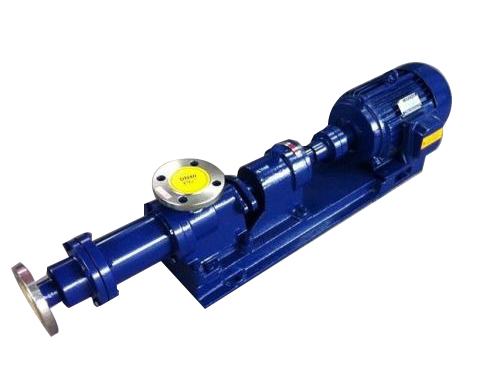
Troubleshooting rotor issues in a screw pump system is one of the most effective ways to restore efficiency, reduce downtime, and extend the life of critical rotating equipment.
This detailed guide focuses exclusively on industry?standard practices for diagnosing and solving rotor problems in screw pumps, without promoting any specific brands or manufacturers.
The content is structured and keyword?rich to support search engine optimization (SEO) while remaining practical and technically accurate for maintenance engineers, reliability specialists, and plant operators.
In a screw pump system, the rotor is the rotating screw element (or elements) that displaces fluid along the axial direction.
Depending on the pump design, the rotor may be a single screw, twin screw, or multiple screws intermeshing within a close?fitting casing or liner.
The rotor converts mechanical energy from the driver (motor, engine, or turbine) into hydraulic energy by:
| Rotor Type | Typical Configuration | Key Application Areas | Rotor?Related Sensitivities |
|---|---|---|---|
| Single Screw (Progressing Cavity) | Single helical rotor inside an elastomeric stator | Sludge, slurries, viscous and shear?sensitive fluids | Elastomer wear, rotor–stator interference, dry running |
| Twin Screw Pump | Two intermeshing screws, usually timed by external gears | Multiphase fluids, crude oil, loading/unloading, food | Screw pitting, timing gear issues, axial and radial clearances |
| Three Screw Pump | One driven power rotor and two idler rotors | Hydraulic oil, lubrication oil, fuel oil, clean liquids | Clearance wear, rotor scoring, cavitation erosion |
| Multi?Screw (4+ Screws) | Multiple screws for special process applications | Chemical processing, high?pressure transfer | Alignment, complex flow paths, tight tolerances |
The rotor geometry and surface finish directly affect screw pump performance.
Common performance indicators linked to rotor condition include:
Any distortion, wear, or damage to the rotor can quickly translate into reduced capacity, increased slip, and mechanical failures in the screw pump system.
Understanding the most common rotor issues helps narrow down troubleshooting efforts and guides inspection activities.
Rotor wear is one of the most frequently observed problems in screw pump systems. It can be uniform or localized, and it is often driven by:
| Wear Pattern | Visual Indicators | Likely Root Cause |
|---|---|---|
| Uniform circumferential wear | Even thinning of screw flanks; general loss of profile | Normal aging under continuous operation; mild abrasives |
| Localized scoring | Deep scratches along the length of the rotor | Solid contaminants, foreign objects, hard particles |
| End wear (suction or discharge) | More material loss near one end | Misalignment, thrust loading issues, axial movement |
| Asymmetric wear on one side | One side heavily worn, opposite side almost intact | Radial misalignment, shaft bending, improper clearance |
Rotor scoring occurs when hard particles, metal fragments, or foreign objects are trapped between the rotor and the housing or stator.
This can severely damage surfaces and compromise the sealing line, leading to:
Corrosion results from chemical attack of the rotor material by the pumped medium or cleaning agents.
Common corrosion mechanisms include:
Fatigue damage in a screw pump rotor can occur when cyclic mechanical or thermal loads exceed design allowances. Typical contributors:
A bent rotor or misaligned rotor shaft can cause:
If the screw pump experiences inadequate suction head (low NPSHa), cavitation can occur.
Implosion of vapor bubbles near the screw surfaces leads to:
Rotor issues are often detected indirectly through performance changes and mechanical symptoms.
Linking these symptoms to possible rotor faults is a key element of effective troubleshooting.
| Observed Symptom | Potential Rotor?Related Cause | Secondary Indicators |
|---|---|---|
| Reduced flow rate | Rotor wear, erosion, or increased clearances | Higher slip, normal power draw, gradual trend |
| Inability to reach discharge pressure | Worn rotor, damaged profile, cavitation damage | Pump runs smoothly but cannot build pressure |
| Increased power consumption | Rotor rubbing, misalignment, tight clearances | Rising motor current, temperature increase |
| Abnormal vibration | Bent rotor, unbalance, scoring, fatigue cracks | High 1× or 2× running speed vibration, noise |
| Loud metallic or grinding noise | Direct rotor–casing contact, foreign object damage | Rapid drop in efficiency, temperature spikes |
| Frequent seal or bearing failures | Rotor misalignment, shaft deflection, high loads | Short bearing life, hot seals, leakage at stuffing box |
| Pulsating discharge pressure | Rotor damage, worn sections causing intermittent slip | Pressure spikes, noise changes, unstable operation |
An organized troubleshooting approach helps identify whether the rotor is the primary source of a screw pump problem or part of a broader system issue.
Before disassembling the pump, collect as much operational information as possible:
Tip: Compare the current operating data to baseline values recorded after commissioning or following the last rotor overhaul. Deviations often highlight rotor?related issues.
Rotor performance is affected by the overall screw pump system. Verify:
Non?intrusive tests help confirm whether the rotor is likely affected:
If data suggests rotor issues, isolate the pump safely:
Once the casing is opened and the rotor is accessible, perform a structured inspection.
Use calibrated measurement tools such as micrometers, calipers, and dial indicators to measure:
| Inspection Item | What to Measure | Typical Indication of Problem |
|---|---|---|
| Rotor OD vs. design | Actual OD minus nominal OD | Excess negative deviation indicates wear or erosion |
| Clearance to casing | Gap at several radial positions | Non?uniform gap suggests misalignment or bending |
| Runout | Total indicator runout at specified planes | Runout beyond limit indicates bent rotor or shaft |
| Pitch and flank profile | Template or CMM comparison | Geometry deviation reduces volumetric efficiency |
Once the rotor condition is understood, link observed damage patterns to likely root causes.
| Observed Rotor Condition | Probable Root Cause | Verification Actions |
|---|---|---|
| Uniform wear, gradual loss of capacity | Normal aging, abrasive solids, long service interval | Check filtration, review run hours, verify material selection |
| Deep scoring, sudden efficiency drop | Foreign objects, failed strainer, upstream equipment damage | Inspect suction line, strainers, tanks; check for metal fragments |
| Pitting on flanks, noisy operation | Cavitation or corrosive attack | Evaluate NPSHa vs. NPSHr, analyze fluid chemistry |
| Asymmetrical wear, vibration at 1× | Misalignment or bent rotor | Measure shaft alignment, runout, and bearing clearances |
| Cracks at root of screw profile | Fatigue from overload or cyclic stress | Check operating pressure vs. design, review start/stop cycles |
Based on inspection and root cause, determine the optimal corrective action:
Abrasive wear is common when screw pumps handle fluids containing sand, silt, scale, or other hard particles.
Preventive and predictive maintenance programs significantly reduce rotor?related failures in screw pump systems.
Inspection intervals depend on duty severity, fluid characteristics, and criticality.
| Service Type | Typical Fluid Conditions | Suggested Rotor Inspection Interval | Key Tasks |
|---|---|---|---|
| Clean lubricating service | Low solids, stable viscosity, low corrosion | Every 8,000–12,000 run hours | Visual check, clearance measurement, vibration trending |
| Mildly abrasive service | Fine solids, moderate wear potential | Every 4,000–8,000 run hours | Measure rotor wear, inspect filters, evaluate erosion |
| Highly abrasive or corrosive service | High solids, aggressive chemistry | Every 2,000–4,000 run hours | Detailed rotor and casing inspection, material review |
| Critical continuous process duty | Any fluid, high availability required | Condition?based with online monitoring | Vibration, motor current, temperature, performance analysis |
Rotor material selection has a major impact on wear resistance, corrosion resistance, and overall screw pump reliability.
| Rotor Material | Main Advantages | Typical Limitations | Typical Applications |
|---|---|---|---|
| Carbon steel | Cost?effective, good mechanical strength | Limited corrosion resistance, prone to rust | Clean lubricating oils, non?corrosive fluids |
| Alloy steel | Improved strength and toughness | Requires surface protection in corrosive service | High?pressure oil transfer, power generation |
| Stainless steel (e.g., 304, 316) | Good corrosion resistance, sanitary compatibility | Can be less wear?resistant in abrasive service | Chemical, food, and beverage applications |
| Hardened tool steel | High wear resistance, high hardness | May be brittle, requires proper lubrication | Abrasive slurries, high?solids service |
| Surface?treated (nitrided, coated) | Enhanced surface hardness and wear resistance | Coating damage possible in impact conditions | Applications with balanced wear and corrosion demands |
Selecting the appropriate rotor material and surface treatment helps prevent premature rotor wear, scoring, and corrosion, significantly enhancing screw pump uptime.
Many rotor issues are preventable through disciplined operation of the screw pump system.
Running a screw pump without adequate fluid can cause:
Implement level controls, interlocks, or flow switches to prevent dry running events.
Good suction conditions prevent cavitation and rotor erosion:
Rotor clearances in screw pumps are influenced by fluid temperature and viscosity:
The following troubleshooting matrix can be used as a quick reference when diagnosing rotor issues in screw pump systems.
| Symptom | Likely Rotor?Related Cause | Immediate Check | Recommended Corrective Action |
|---|---|---|---|
| Flow reduced, pressure normal | Moderate rotor wear, clearances increased | Check pump speed and suction pressure | Inspect rotor dimensions, consider re?profiling or replacement |
| Flow and pressure reduced | Severe rotor wear or cavitation damage | Listen for cavitation noise, check NPSHa | Correct suction conditions; refurbish or replace rotor and inspect casing |
| High power draw, hot casing | Rotor rubbing or misalignment | Measure vibration, feel for hot spots on casing | Check alignment, inspect rotor for scoring and deformation |
| High vibration at 1× speed | Rotor unbalance, bent shaft, uneven wear | Perform vibration analysis and runout checks | Balance or replace rotor, correct alignment and support issues |
| Loud metallic noise | Direct contact between rotor and housing | Shut down immediately, inspect internally | Remove foreign objects, correct clearances, check bearings and supports |
| Frequent seal failures | Excessive shaft deflection from rotor issues | Check radial runout and bearing condition | Reduce deflection by correcting rotor, bearings, and system loads |
Rotor condition directly influences both volumetric and mechanical efficiency in screw pumps.
Monitoring and optimizing these parameters is a powerful strategy to detect early rotor issues.
Volumetric efficiency is the ratio of the actual delivered flow to the theoretical flow at a given speed:
Volumetric Efficiency (%) = (Actual Flow / Theoretical Flow) × 100
When the rotor wears and clearances expand, internal leakage (slip) increases, causing a noticeable drop in volumetric efficiency even if the pump still runs smoothly.
Mechanical efficiency is influenced by rotor friction, bearing conditions, and seal drag.
Rotor scoring, misalignment, or rubbing increase mechanical losses, resulting in higher power consumption.
Monitoring motor current and comparing it to baseline data at similar flow and pressure provides a quick indication of changes in mechanical efficiency due to rotor problems.
A proactive condition monitoring program is one of the most effective ways to detect rotor issues in a screw pump before they lead to unplanned downtime.
Use this checklist during maintenance or troubleshooting activities:
Reliable screw pump operation depends heavily on the condition of the rotor.
By understanding rotor failure modes, monitoring performance indicators, and applying systematic troubleshooting methods, plant personnel can:
A structured approach that combines operating data analysis, physical inspection, and preventive maintenance delivers long?term reliability and performance for any screw pump system, regardless of manufacturer or application.
Focusing attention on the rotor—the core component of the pump—ensures that screw pump assets continue to deliver consistent flow, pressure, and efficiency throughout their service life.
```

Copyright ? Jiangsu Longjie Pump Manufacturing Co., Ltd.



 Phone
Phone
Comment
(0)