

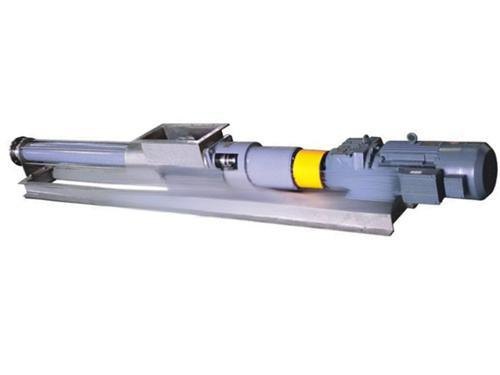
Sludge screw pumps play a critical role in modern municipal wastewater treatment plants.
As treatment facilities handle increasing volumes of domestic and industrial sewage,
reliable and energy?efficient sludge handling equipment is essential.
This page provides an in?depth, search?optimized overview of the
applications of sludge screw pumps in municipal wastewater treatment,
along with definitions, technical advantages, typical specifications, and selection guidelines.
A sludge screw pump is a positive displacement pump designed to convey
viscous, abrasive, and solids?laden media, such as primary sludge,
waste activated sludge, thickened sludge, and digested sludge.
In municipal wastewater treatment, sludge screw pumps are commonly based
on the progressive cavity principle or on
open channel screw pump technology, depending on the application.
While design details vary, most sludge screw pumps used in municipal wastewater treatment
share several key components:
In a typical progressive cavity sludge screw pump,
the rotating rotor forms cavities with the stator.
As the rotor turns, these cavities move from the suction side to the discharge side,
transporting sludge with minimal shear and pulsation.
This predictable volumetric displacement enables accurate and steady sludge flows
across a wide range of viscosities and solids concentrations.
Municipal wastewater sludge is often sticky, dense, and heterogeneous.
It may contain fibrous materials, grit, and entrained gas.
Traditional centrifugal pumps can struggle with such media,
experiencing blockage, cavitation, or reduced efficiency.
In contrast, sludge screw pumps in municipal wastewater treatment offer:
The term “sludge screw pump” can refer to several related pump types used in municipal applications.
Each type has specific strengths and is selected according to plant layout,
flow capacity, and process requirements.
Progressive cavity sludge pumps (also called
PC pumps or eccentric screw pumps) are the most widely used
version in sludge conditioning, thickening, and dewatering systems.
These pumps are ideal for:
Open channel screw pumps use a large screw (Archimedean screw)
rotating in an inclined trough, often partially submerged.
They are primarily used for:
In many cases, these open channel screw pumps deal more with
diluted sewage and mixed liquor than with concentrated sludge.
However, the same screw principle and robust design philosophy
underpin both open channel and enclosed progressive cavity screw pumps.
Enclosed screw conveyors and screw pumps are frequently used for
high?solids sludge cake handling, especially after mechanical dewatering.
These systems may be configured as:
While the mechanical details differ from progressive cavity pumps,
the overall objective remains the same:
efficient, clog?resistant transport of viscous, semi?solid sludge.
Within a municipal wastewater treatment plant,
sludge screw pumps can appear at several different stages.
The following sections detail the most common applications of sludge screw pumps in municipal wastewater treatment.
After primary sedimentation, settled solids form primary sludge at the bottom of the clarifier.
This sludge must be removed and pumped to:
Sludge screw pumps are particularly effective here because primary sludge often contains:
Progressive cavity sludge screw pumps maintain stable flow
even when the suction side experiences changing sludge levels.
They are usually installed with robust suction piping,
strainers or grinders (if required), and instrumentation for flow and pressure control.
Biological treatment processes such as activated sludge systems
generate waste activated sludge that must be removed from secondary clarifiers.
This WAS is typically thinner (lower solids content) than primary sludge
but can still cause challenges for centrifugal pumps due to floc structure and entrained air.
Sludge screw pumps are used to:
The accurate metering capability of progressive cavity sludge screw pumps
helps operators maintain precise sludge age and solids retention time (SRT)
in biological treatment basins.
After gravity thickening, DAF thickening, or rotary drum thickening,
sludge dry solids may increase to 4–8% or higher.
As viscosity and yield stress increase, sludge behaves more like a paste than a liquid.
Applications of sludge screw pumps in thickened sludge handling include:
Progressive cavity sludge screw pumps can handle high suction lifts
and maintain flow even when sludge rheology changes due to
temperature or polymer dosage variations.
The low shear pumping action also preserves floc structure
when that is beneficial for downstream dewatering.
Anaerobic and aerobic digesters stabilize sludge,
reducing volatile solids and pathogens.
Digested sludge often contains gas bubbles, adding compressibility and
making it difficult for conventional pumps to maintain constant flow.
Sludge screw pumps are used to:
The positive displacement characteristics of progressive cavity screw pumps
enable them to move gas?laden sludge with less risk of air locking,
provided proper venting and suction design are in place.
Mechanical dewatering technologies such as centrifuges,
belt filter presses, and screw presses
can produce sludge cakes with 18–35% dry solids.
This highly viscous and non?Newtonian material is challenging to pump.
Sludge screw pumps in municipal wastewater treatment
are widely used to:
For these applications, sludge screw pumps often feature:
While not strictly “sludge” pumping,
polymer dosing plays a crucial role in sludge thickening and dewatering.
Some plants use small progressive cavity screw pumps for:
Stable flow and low shear help protect the structure of polymer chains,
improving conditioning efficiency and reducing polymer consumption.
In certain configurations,
open channel screw pumps or progressive cavity pumps
may be used for return activated sludge (RAS) or mixed liquor transfer,
especially where:
When evaluating applications of sludge screw pumps in municipal wastewater treatment,
several advantages stand out.
The following table summarizes key benefits.
| Advantage | Description | Relevance to Municipal Wastewater Treatment |
|---|---|---|
| High solids handling capability | Can pump sludges with high dry solids and large particles without severe wear or clogging. | Critical for thickened and dewatered sludge transfer, as well as primary sludge with grit and fibers. |
| Low shear, gentle conveying | Progressive cavity action minimizes floc breakage and shear?sensitive polymer damage. | Improves performance of downstream dewatering units and maintains sludge structure. |
| Stable, pulsation?free flow | Flow is nearly constant and directly proportional to speed. | Enables accurate dosing and feed control to digesters, thickeners, and dewatering systems. |
| Wide viscosity range | Capable of handling everything from thin sludge to paste?like cake. | Allows use of one pump type in multiple stages of the plant. |
| Self?priming and high suction lift | Can draw sludge from below pump centerline with appropriate design. | Useful where sludge tanks or pits are located at lower elevations. |
| Good metering capability | Positive displacement principle supports precise flow control via variable speed drives. | Helps maintain process setpoints and optimize chemical and energy consumption. |
| Flexible installation | Horizontal, vertical, and inclined configurations are possible. | Adapts to space limitations in retrofit or compact urban treatment plants. |
| Energy efficiency in high viscosity applications | Positive displacement pumps can be more efficient than centrifugal pumps when handling viscous sludges. | Reduces operational costs in thickened and dewatered sludge handling systems. |
The performance range of sludge screw pumps varies according to design,
but typical values for municipal wastewater treatment are summarized below.
These figures are indicative and should always be verified
against individual pump models and process requirements.
| Parameter | Typical Range | Notes for Municipal Applications |
|---|---|---|
| Flow rate | 0.1 to 400 m3/h (≈0.4 to 1,760 gpm) | Smaller pumps are used for polymer dosing; larger units for thickened and digested sludge. |
| Discharge pressure | Up to 24 bar or higher, depending on stages | Multi?stage screw pumps achieve higher pressures for long pipelines or high heads. |
| Dry solids content (DS) | 0.5% to over 35% DS | Low DS for primary/WAS, medium DS for thickened sludge, high DS for dewatered cake. |
| Viscosity range | From water?like to paste?like sludges | Exact viscosity depends on sludge composition and temperature. |
| Rotational speed | 50 to 600 rpm (or lower for high solids) | Lower speeds reduce wear and shear, especially for abrasive or thick sludges. |
| Materials (wetted parts) | Stainless steels, ductile iron, abrasion?resistant alloys | Material selection depends on corrosion potential, grit content, and temperature. |
| Stator materials | Various elastomers (e.g., NBR, EPDM, FKM) | Chosen based on chemical compatibility with sludge and any treatment chemicals. |
| Seal types | Mechanical seals, packed glands, cartridge seals | Specific seal selection is influenced by solids content and maintenance strategy. |
Proper selection and sizing are essential to maximize the performance of
sludge screw pumps in municipal wastewater treatment applications.
The following factors should be evaluated at the design stage.
Understanding the characteristics of the sludge to be pumped
is the foundation of reliable pump selection.
Key parameters include:
Impacts viscosity, pump torque, power consumption, and wear rate.
Influences rotor?stator clearance, inlet size, and potential for blockage.
Requires abrasion?resistant materials or upstream screening/grinding.
Sludge may exhibit yield stress, thixotropy, or non?Newtonian properties.
Chemical dosing (e.g., polymers, iron salts, lime)
affects elastomer and metal compatibility.
The required flow rate and discharge pressure define the basic pump size
and the number of stages for progressive cavity designs.
Engineers should consider:
The physical arrangement of the sludge screw pump,
suction piping, and sludge feed tanks strongly influences performance:
hoppers and feed screws may be required to ensure consistent filling.
Sludge often contains sand, grit, and other abrasive particles that can accelerate wear.
To extend pump life:
Variable speed drives (VSDs) are frequently installed
with sludge screw pumps in municipal wastewater treatment plants.
They offer:
Additional instrumentation may include:
Downtime in sludge handling can disrupt the entire treatment process.
When selecting sludge screw pumps, consider:
To realize the full benefits of sludge screw pumps in municipal wastewater treatment,
operators should follow proven operational practices.
which can quickly damage the stator and seals.
if large debris is likely.
rising values can indicate line blockage or thickening sludge.
for bridging or rat?holing of sludge cake.
progressive cavity pumps rely on precise rotor?stator fit for performance.
When selecting sludge transfer equipment,
plant designers often compare screw pumps with other pump technologies.
The following table outlines general differences in the context of
municipal wastewater sludge applications.
| Pump Type | Strengths in Sludge Applications | Limitations Compared with Sludge Screw Pumps |
|---|---|---|
| Sludge screw pumps (progressive cavity) | High solids handling, low shear, stable flow, good suction performance. | Stator wear with abrasive sludges; higher initial cost than some centrifugal pumps. |
| Centrifugal pumps | Good for large volumes of low solids liquids; lower capital cost. | Reduced efficiency for viscous sludge; higher shear; limited solids handling capability. |
| Diaphragm pumps | Can handle slurries, self?priming, good for intermittent service. | Pulsating flow; lower capacity for continuous, high?volume sludge transfer. |
| Peristaltic (hose) pumps | Excellent metering accuracy; handles abrasive fluids well. | Hose wear can be high; usually limited to smaller flows compared with screw pumps. |
| Piston and plunger pumps | High pressure capability; suitable for specific high?pressure sludge applications. | More complex and expensive; can have higher maintenance needs; pulsating flow. |
Total cost of ownership for sludge pumping equipment
includes not only purchase price but also:
In many applications of sludge screw pumps in municipal wastewater treatment,
screw pumps provide favorable life?cycle economics because:
for high viscosity sludges than centrifugal alternatives.
Note:
Actual energy savings and life?cycle costs depend on site?specific conditions,
including sludge characteristics, duty cycles, and maintenance practices.
Detailed engineering evaluation is recommended during project planning.
Sludge handling systems must meet stringent health, safety,
and environmental requirements.
Sludge screw pumps contribute to safe operation through:
Best practices in municipal wastewater treatment also include:
Sludge screw pumps form a vital link in the chain of
municipal wastewater treatment processes.
From primary sludge removal and waste activated sludge transfer
to thickened and dewatered sludge handling,
these pumps ensure consistent, reliable movement of challenging sludge streams.
The applications of sludge screw pumps in municipal wastewater treatment include:
Their ability to handle high solids,
provide low shear conveying, and deliver stable, controllable flows
makes them especially well suited to the complex demands
of municipal wastewater treatment plants.
With careful selection, proper design, and disciplined maintenance,
sludge screw pumps offer long?term, energy?efficient, and
dependable service in sludge management systems.
```

Copyright ? Jiangsu Longjie Pump Manufacturing Co., Ltd.



 Phone
Phone
Comment
(0)